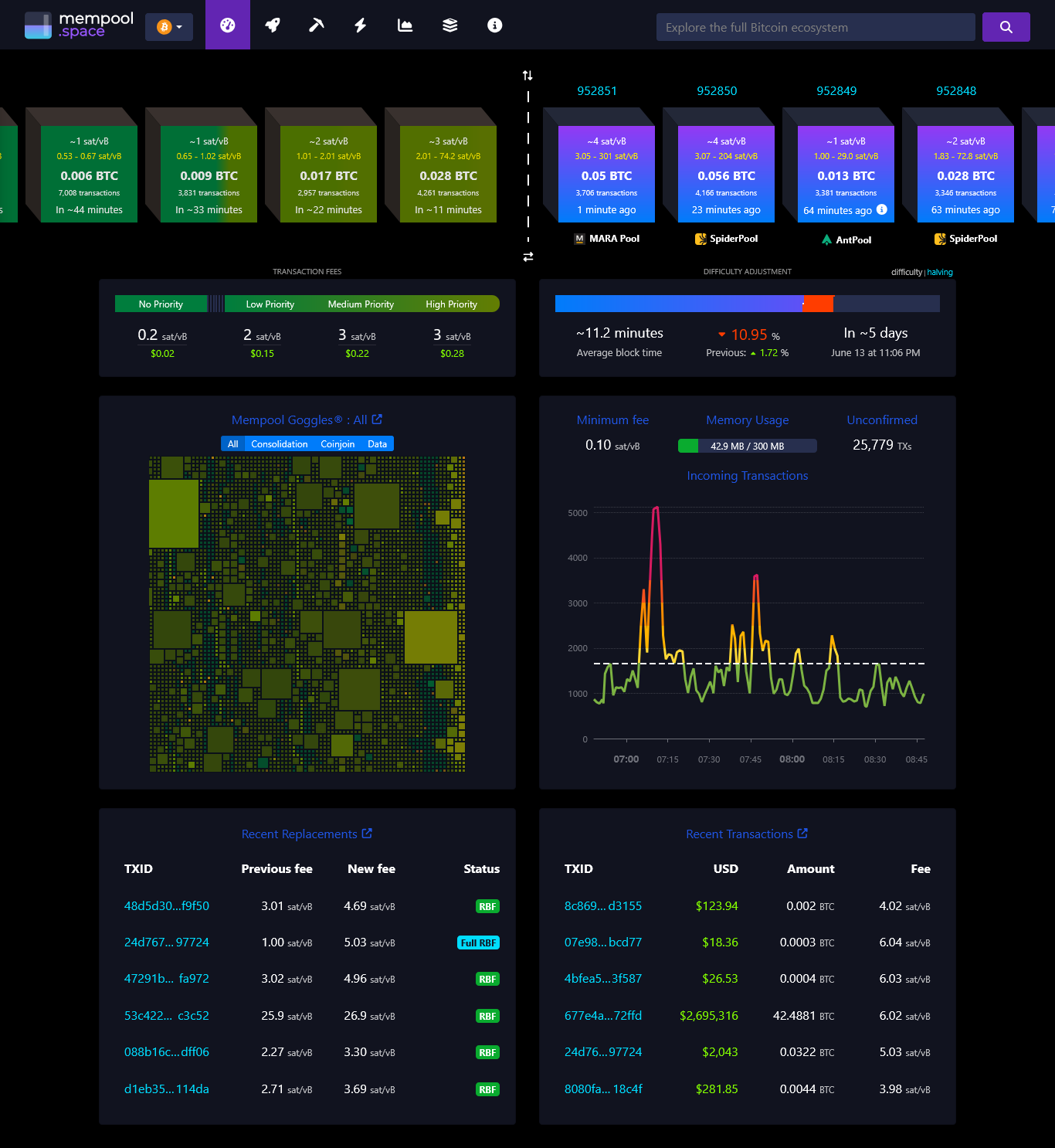
Introduction :>
Blockchain technology has transformed the way digital transactions are processed and verified. Behind every successful cryptocurrency transfer lies an important but often overlooked component known as the Mempool. Short for "memory pool," the Mempool serves as a temporary holding area where transactions wait before being confirmed and added to the blockchain. Understanding how the Mempool works is essential for anyone involved in cryptocurrencies, blockchain development, or decentralized finance.
What Is a Mempool?
A Mempool is a collection of unconfirmed transactions maintained by nodes in a blockchain network. When a user initiates a transaction, it is first broadcast to the network and enters the Mempool of participating nodes. The transaction remains there until a miner or validator selects it for inclusion in a new block.
In simple terms, the Mempool functions like a waiting room at a hospital. Transactions arrive, wait their turn, and are eventually processed based on network rules and incentives.
How Transactions Enter the Mempool ://
The process begins when a user submits a transaction through a wallet or application. The transaction is then propagated across the network and undergoes basic validation checks, such as:
1. Verifying digital signatures 2. Confirming sufficient account balance
3. Ensuring the transaction format is valid 4. Checking for double-spending attempts
// Once validated, the transaction is placed in the Mempool and becomes visible to miners or validators.
Transaction Selection and Fees ://
Most blockchain networks have limited block space. As a result, not every transaction can be included immediately. Miners and validators typically prioritize transactions offering higher fees because these fees serve as an incentive for processing them.
When network activity is low, transactions with modest fees may be confirmed quickly. During periods of congestion, however, users often compete by offering higher fees to secure faster confirmation.
For example, on the Bitcoin network, miners frequently select transactions based on the fee paid per byte of transaction data. This creates a fee market where demand for block space influences transaction costs.
Mempool Congestion ://
Mempool congestion occurs when the number of incoming transactions exceeds the network's processing capacity. During these periods:
1. Transaction fees rise significantly. 2. Confirmation times increase.
3. Lower-fee transactions may remain unconfirmed for extended periods.
4. Some nodes may eventually discard very old or low-priority transactions.
// Congestion commonly occurs during periods of high market volatility, NFT launches, token sales, or widespread adoption events.
Differences Across Blockchain Networks
Not all blockchains manage Mempools in the same way.
Bitcoin :/
Bitcoin uses a transparent Mempool system where transactions compete primarily based on transaction fees. The Mempool is publicly observable, allowing users to estimate appropriate fees for confirmation.
Ethereum :/
Ethereum's mempool is more complex due to smart contract interactions. Validators often prioritize transactions based on gas fees, and users may adjust fees dynamically to accelerate processing.
Proof-of-Stake Networks :/
Many Proof-of-Stake (PoS) blockchains maintain mempools while relying on validators instead of miners. Although the selection mechanism differs, the fundamental purpose remains the same: temporarily storing unconfirmed transactions.
Why the Mempool Matters
The Mempool plays a crucial role in blockchain operations by:
1. Managing transaction flow across the network.
2. Preventing immediate overload of blockchain nodes.
3. Creating a marketplace for transaction prioritization.
4. Providing transparency into network demand and congestion.
5. Helping users estimate transaction confirmation times.
// For traders and investors, Mempool activity can also provide insights into network usage and market behavior.
Security Considerations ://
Because transactions are visible in the Mempool before confirmation, certain risks can arise. One example is front-running, where participants observe pending transactions and submit competing transactions with higher fees to gain priority.
Blockchain developers continue to explore solutions such as private transaction pools, encrypted mempools, and advanced ordering mechanisms to reduce these risks.
Future Developments //
As blockchain adoption grows, scalability solutions are becoming increasingly important. Technologies such as Layer 2 networks, rollups, sharding, and improved consensus mechanisms aim to reduce Mempool congestion and improve transaction throughput.
Future blockchain architectures may significantly alter or even replace traditional Mempool designs, but the underlying challenge of managing pending transactions will remain a critical aspect of decentralized systems.
Conclusion ://
The Mempool is a fundamental component of blockchain infrastructure that acts as a bridge between transaction submission and confirmation. By temporarily storing and organizing unconfirmed transactions, it helps maintain network efficiency, security, and fairness. Whether you are a cryptocurrency user, investor, or developer, understanding the Mempool provides valuable insight into how blockchain networks process transactions and manage demand.

AI Website Creator